
Checking Criminal History in Liberty County
Start by deciding what the record must prove. A filed felony belongs with the Liberty County District Clerk. A Class A or B misdemeanor belongs with the County Clerk. A sheriff incident report or booking record comes from the Sheriff's Office, while a city police report stays with that city. The Texas Department of Public Safety, or TxDPS, adds a state layer for reported convictions and deferred adjudications. Each source answers a different question, so a blank result in one place does not settle the search.
Gather a full legal name, known spelling variants, date of birth when it may lawfully be used, an approximate date, and any cause, incident, or booking number. A cause number is stronger than a name match. Searchers should also distinguish the event location from the agency and court. An arrest in Dayton, for example, may create a Dayton police report, a county booking, and a later file at the Liberty courthouse.
- Search the proper Liberty County clerk channel for a filed case. Use the District Clerk route for felonies and the County Clerk route for county-level misdemeanors.
- Check current custody through the official jail channel or call the sheriff when the portal does not return a usable result.
- Request the incident narrative from the agency that wrote it. Do not assume the sheriff holds a city police report.
- Use the TxDPS public name search for its limited Texas conviction and deferred-adjudication scope, then verify identity and disposition.
- For your own fuller identity-based state record, follow TxDPS instructions and submit fingerprints through FAST.
The official Liberty County government portal shows how departments remain split across the county.

Its directory is the reliable starting point when an online index cannot supply the actual record or a certified copy.
Three Liberty County Record Systems
A jail booking, a court cause, and a DPS criminal-history cycle are often treated as one record. They are not. The jail record centers on intake, initial charges, bond, holds, and present or released custody status. The court file centers on one cause number, the charge that was actually filed, motions, pleas, judgment, and sentence. The DPS cycle links a fingerprinted arrest event to later reported prosecution and disposition data.
The timing differs too. A person can be booked before a prosecutor decides what to file. A court can later dismiss one count, accept a plea on another, or record an acquittal. DPS may receive that result later, and an unmatched tracking number can keep the arrest and outcome apart. Read each source for its own purpose rather than merging fields into a narrative the records do not support.
| Liberty County source | Best answer | Main limit |
|---|---|---|
| County jail record | Booking, bond, holds, and custody | Initial charge may change |
| Clerk case file | Filed charge, docket, result, and sentence | May not show a new arrest yet |
| TxDPS public search | Public Texas convictions and deferred adjudications reported to DPS | Name based and not a full fingerprint record |
Note: An empty index result is not a clean-record certificate, especially for a new, old, sealed, restricted, or not-yet-indexed event.
Texas Official Background Checks
TxDPS Crime Records Division offers two distinct paths. The Criminal History Conviction Name Search lets a member of the public search Texas convictions and deferred adjudications that state law permits DPS to release. Each online search uses a $1 credit. Credit-card purchases add 2.25 percent per credit and $0.25 per transaction. DPS also lists a $10 offline name check. A matching name is only a candidate match because the public process does not compare the searcher with fingerprints.
Reviewing your own fuller Texas record uses the fingerprint process. TxDPS directs the person to its Review of Personal Criminal History instructions, then to Fingerprint Applicant Services of Texas, or FAST, for capture through IdentoGO. DPS lists $15 for the fingerprint record and $10 for FAST fingerprinting. The service code and identity documents in the DPS instructions matter. A generic fingerprint appointment is not a substitute for that process.
| Official channel | Listed base charge | What it does |
|---|---|---|
| TxDPS online name search | $1 credit per search | Returns the public conviction and deferred-adjudication product |
| TxDPS offline name check | $10 | Provides the state name-check route outside the online credit system |
| DPS fingerprint record review | $15 | Reviews the requester's own identity-based Texas record |
| FAST fingerprint capture | $10 | Captures prints for the authorized DPS review process |
The TxDPS conviction-search information page explains the scope and credit system.

The state page helps separate a public name query from the fingerprint-supported review a person uses for their own record.
DPS or FAST for Liberty County Records
Choose the channel by the question. A public name search can help locate public Texas conviction or deferred-adjudication information. It can also return a false match or miss the intended person because names and birth details are not fingerprints. Adding a middle name and exact birth date can narrow results, but it does not turn the product into an identity certification.
FAST is the sound choice when reviewing your own Liberty County criminal history as held by DPS, or when an entry appears incomplete. Schedule through the official IdentoGO route or its published phone channel, use the service code in the DPS instructions, and retain the transaction details. Once the record arrives, compare the arrest cycle with the Liberty County judgment or dismissal. If a disposition is absent, work from a certified source document and the DPS challenge process instead of asking a search vendor to change a government record.
| TxDPS search field | Use | Search note |
|---|---|---|
| Last name | Required | Spelling controls candidate matches |
| First name | Required | Use the legal name when known |
| Middle name | Optional | Helps narrow common names |
| Date of birth | Optional but important | Use an exact known date |
The official FAST enrollment interface is the appointment channel identified by TxDPS.
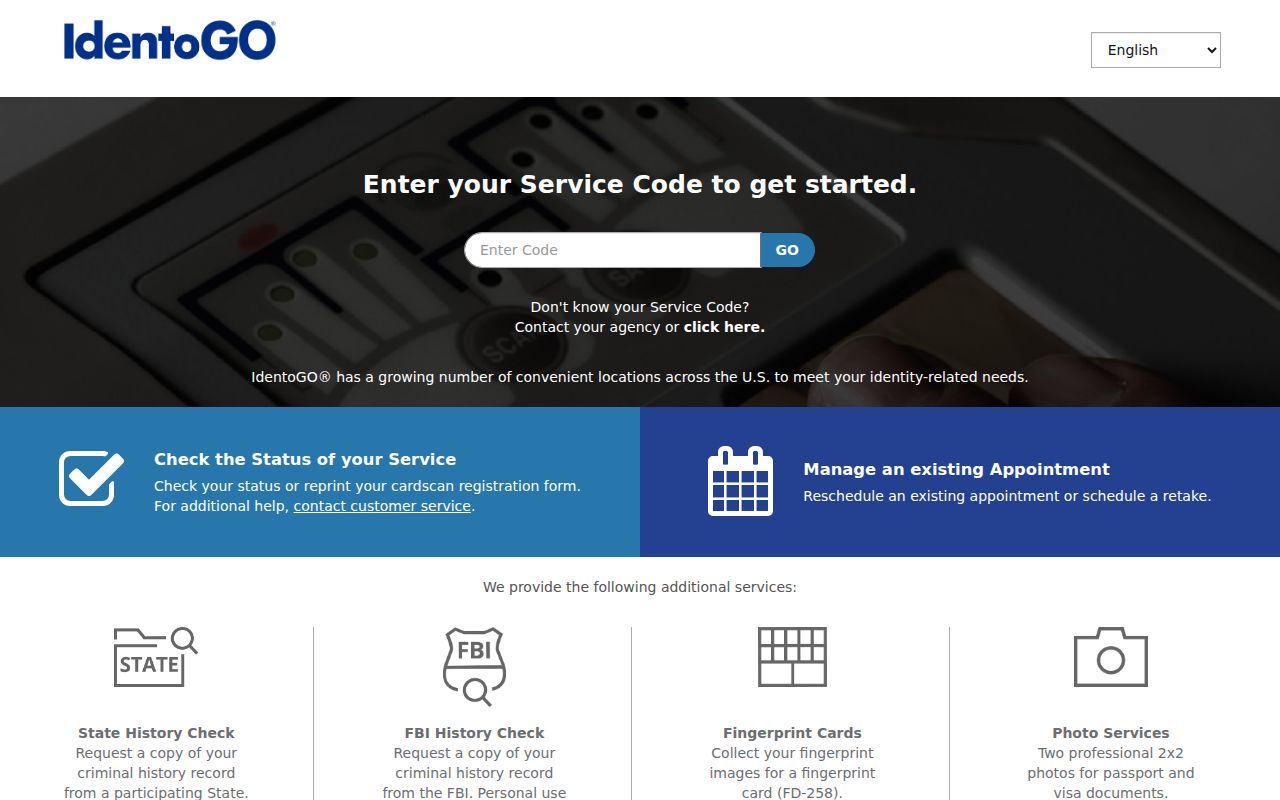
Enrollment should follow the state review instructions so the prints reach the correct criminal-history service.
Criminal Record Types
Liberty County records form a chain, not a single file. The arresting agency writes the incident or arrest narrative. Jail staff create the booking record. A prosecutor may file a complaint, information, or indictment, which becomes part of the clerk's case file. The court then records events and the outcome. Reportable arrest and disposition events also flow to TxDPS, while custody or supervision can later appear with the jail, TDCJ, the county Community Supervision and Corrections Department, or the state parole system.
- Incident or arrest report: The writing agency holds the narrative, location, alleged offense, officer, and releasable evidence details.
- Booking record: Liberty County Jail records intake, initial charges, bond, holds, and custody or release information.
- Court case file: The proper clerk keeps filed charges, docket events, pleas, orders, judgment, and sentence.
- Warrant or capias: The issuing court and serving agency track authority, status, bond, and execution.
- DPS criminal history: Texas links reportable arrest cycles with prosecution, disposition, and custody events submitted by agencies.
A sex-offender registration profile is another distinct statutory record. Local law enforcement verifies qualifying registrants and submits public fields to the Texas registry. Probation casework is not made public merely because a judgment includes community supervision.
Liberty County Booking Record Flow
A reportable adult arrest for a Class B misdemeanor or greater offense starts a state reporting cycle. The booking agency photographs and fingerprints the person and sends the event to the TxDPS Computerized Criminal History system with a tracking control number. The Liberty County jail still keeps its own intake record. Prosecutors can reject or revise the charge, and the court later reports the disposition so DPS can pair the result with the arrest.
Local record flow: Arresting agency → Liberty County booking → prosecutor review → District or County Clerk case → court disposition → TxDPS criminal history.
That flow explains a common mismatch. The jail may show an arrest before a cause is filed, while DPS can lack a disposition that already appears at the courthouse. For current custody, use the official Liberty Judicial Records and Jail Bond Records portal when accessible or call the jail at 936-336-9395. For an agency narrative, contact the arresting department. For a filed outcome, use the right clerk.
Note: A booking charge describes intake, while an information or indictment states the charge that the prosecutor placed before the court.
Inside a Liberty County Criminal Record
Field meaning depends on the record. A Texas rap sheet begins with an identity segment, then groups arrest cycles, prosecution and court results, and custody or supervision events. A Liberty County court file instead follows one cause number. A booking file follows one jail intake. Read the heading and custodian before drawing a conclusion from any charge, status, or date.
| Name and Identifiers | Legal name, aliases, date of birth, and state or FBI identifiers where lawfully shown. |
|---|---|
| Arrest and Booking Data | Agency, arrest and intake dates, tracking number, initial charge, bond, holds, and release status. |
| Charges and Statutes | Offense text, count, classification, filed charge, and statute or code when reported. |
| Disposition | Dismissal, conviction, acquittal, deferred adjudication, no-bill, or another count-specific result. |
| Sentence | Confinement, fine, costs, community supervision, credit, and other terms found in the public order. |
| Custody or Supervision | County custody, TDCJ placement, community supervision, or parole information, subject to access limits. |
Protected identifiers, victim information, juvenile material, and security-sensitive facts may be omitted or redacted. A result must also be read count by count. One count may be dismissed while another ends in conviction, and the final offense can differ from the arrest label.
Liberty County Criminal Record Offices
The central records trip often leads to one of three custodians. Filed felony and misdemeanor cases are held at the Liberty County Courthouse, while sheriff reports are held at the Highway 146 office. North-county residents also have a Cleveland annex with a County Clerk counter, sheriff office, adult probation, and other justice offices. Calling the exact counter first can prevent a trip to the wrong building.
District Clerk: Room 115 at 1923 Sam Houston Street, Liberty, TX 77575; 936-336-4682. This counter holds felony case files and District Court records. County Clerk: the same courthouse; 936-336-4670. This office holds county-court misdemeanor files and arranges certified copies.
Sheriff Records Division: 5345 Highway 146 North, Liberty, TX 77575; 936-336-4506; Monday through Friday, 8 a.m. to 5 p.m. Cleveland Annex: 304 Campbell Street, Cleveland, TX 77327; County Clerk 281-593-8413 and sheriff 281-593-8440.
The Liberty County office directory shows the courthouse and annex contact pattern.
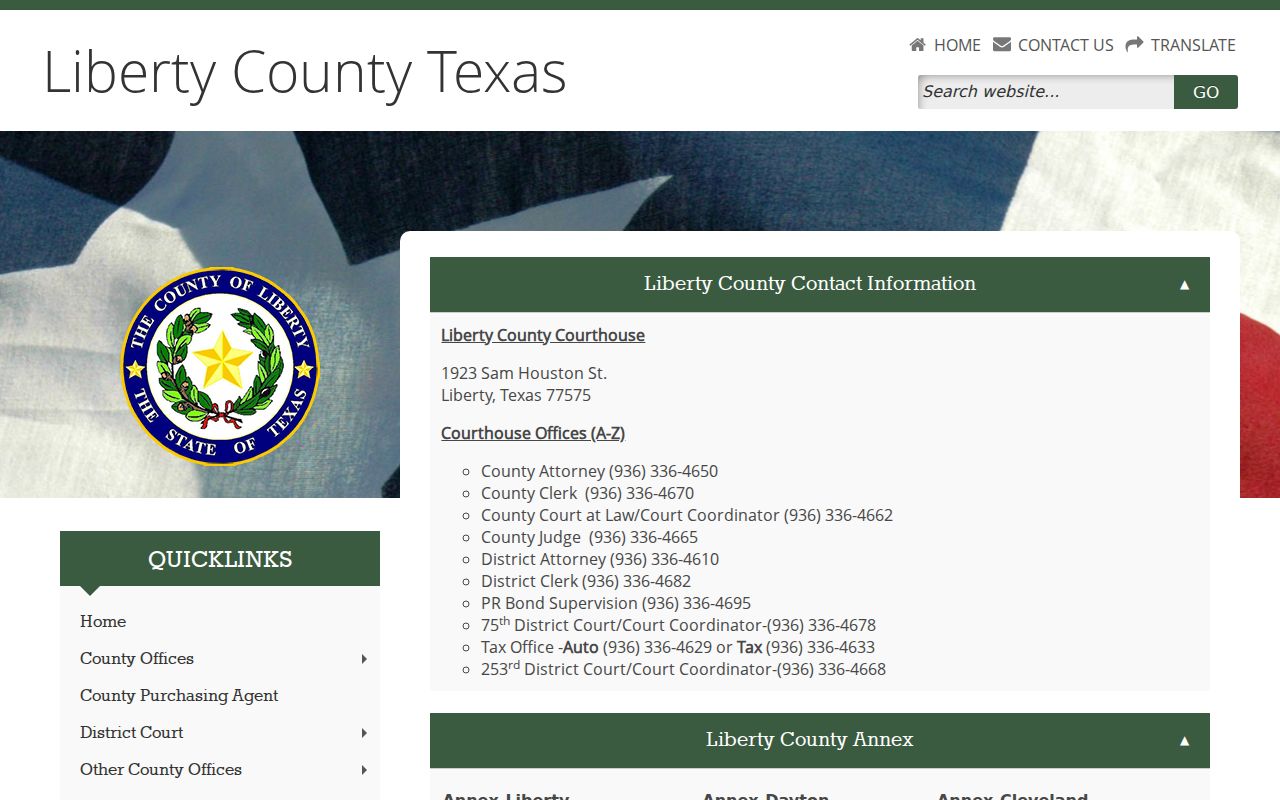
Those separate counters reflect the county's large north-south geography and the legal split between record custodians.
Public Access Laws in Texas
The Texas Public Information Act gives a route to public records held by a government body, but it does not make every field public. Ask the agency that created or keeps the file and describe the record well enough to locate it. Liberty County accepts requests through department routes, the NextRequest submission system, email, mail, and applicable counters. Prompt production is required, yet the ten-business-day Attorney General ruling deadline is not a promise that records will arrive within ten days.
Law-enforcement information tied to an active matter may qualify for withholding. Other law protects juvenile files, victim identities, dates of birth under applicable authority, driver data, financial identifiers, and security-sensitive information. Court records follow clerk and judicial access rules. Certified misdemeanor copies are not digital downloads and cannot be ordered through the public-information portal; the County Clerk directs requesters to call and arrange payment and pickup.
Key Texas laws:
Government Code Chapter 552 gives access to public information and sets request, response, and law-enforcement exception rules.
Government Code Chapter 411 limits criminal-history dissemination while allowing the DPS public conviction and deferred-adjudication product.
Code of Criminal Procedure Chapter 66 governs reporting of arrests, prosecution, dispositions, and custody events.
Code of Criminal Procedure Chapter 55A sets Texas expunction eligibility and procedure.
Note: Public access permits inspection of releasable records; it does not remove laws against threats, retaliation, harassment, or other misuse.
Liberty County Warrant Record Fallback
Liberty County does not publish one countywide warrant search. The Sheriff's Warrants Division accepts a check by fax, mail, or in person, and directs callers to verify the best email route. Its direct line is 936-336-4507, and its posted hours are Monday through Friday from 8 a.m. to 5 p.m. A request should give the requester's name and phone, the subject's name and date of birth, and other useful identifiers.
Identify the issuing court as soon as possible. A municipal or justice-court Class C warrant may remain in that court system, while a felony, Class A, or Class B warrant may be entered through other county channels. The sheriff cannot certify another agency's warrant and takes no warrant payments. A person resolving their own warrant should obtain instructions from the issuing court, keep written recall or payment proof, and recheck because clearance can lag across systems.
The official Sheriff's Warrants Division page supplies the request method and direct contact details. Bench warrants and capias entries should also be checked against the case file to understand why the court issued them.
Sealed, Expunged, and Restricted Records
Texas expunction and nondisclosure have different effects. Expunction is narrow relief that can require agencies to destroy, return, or remove qualifying records. It can apply in statutory cases such as some acquittals, pardons, no-bills, identity theft, and qualifying arrests that did not lead to a final conviction. Eligibility often turns on the whole arrest episode, not just the fact that one charge was dismissed.
An order of nondisclosure generally blocks ordinary public release of qualifying criminal history while preserving access for agencies listed by law. It can cover some completed deferred adjudications and specified convictions, subject to waiting periods and disqualifying offenses. Neither process is automatic merely because a Liberty County case was dismissed. Juvenile information follows separate Family Code restrictions, and ordinary public searches will not reveal records sealed by a valid order.
| Expunction | Removes, destroys, or returns qualifying records as the court order and Chapter 55A require. |
|---|---|
| Nondisclosure | Restricts public release while leaving specified government access in place. |
| Juvenile restriction | Uses separate access and sealing rules under Texas Family Code Chapter 58. |
Current statewide forms should be reviewed before filing through the Liberty County District Clerk. The county does not post a verified expunction filing fee in the source set, so call the clerk for the current total rather than relying on an old figure.
Correcting Liberty County Criminal History
When a DPS entry lacks a Liberty County disposition, first locate the court result. Obtain a certified judgment, dismissal, or other order from the District Clerk or County Clerk that holds the case. Then compare names, identifiers, cause number, arrest date, and count. A spelling issue and an unmatched tracking control number are different problems, so the source record must show what needs correction.
Review your own fingerprint-based DPS record through FAST, then use the DPS challenge route with the source proof. If an expunction or nondisclosure order was entered, keep certified copies and allow agencies time to apply it before checking again. Fixing the government source is the core step. A public portal or private vendor cannot revise the clerk's judgment or the state's criminal-history repository.
The official Liberty County CSCD page shows the separate Liberty and Cleveland community-supervision offices.
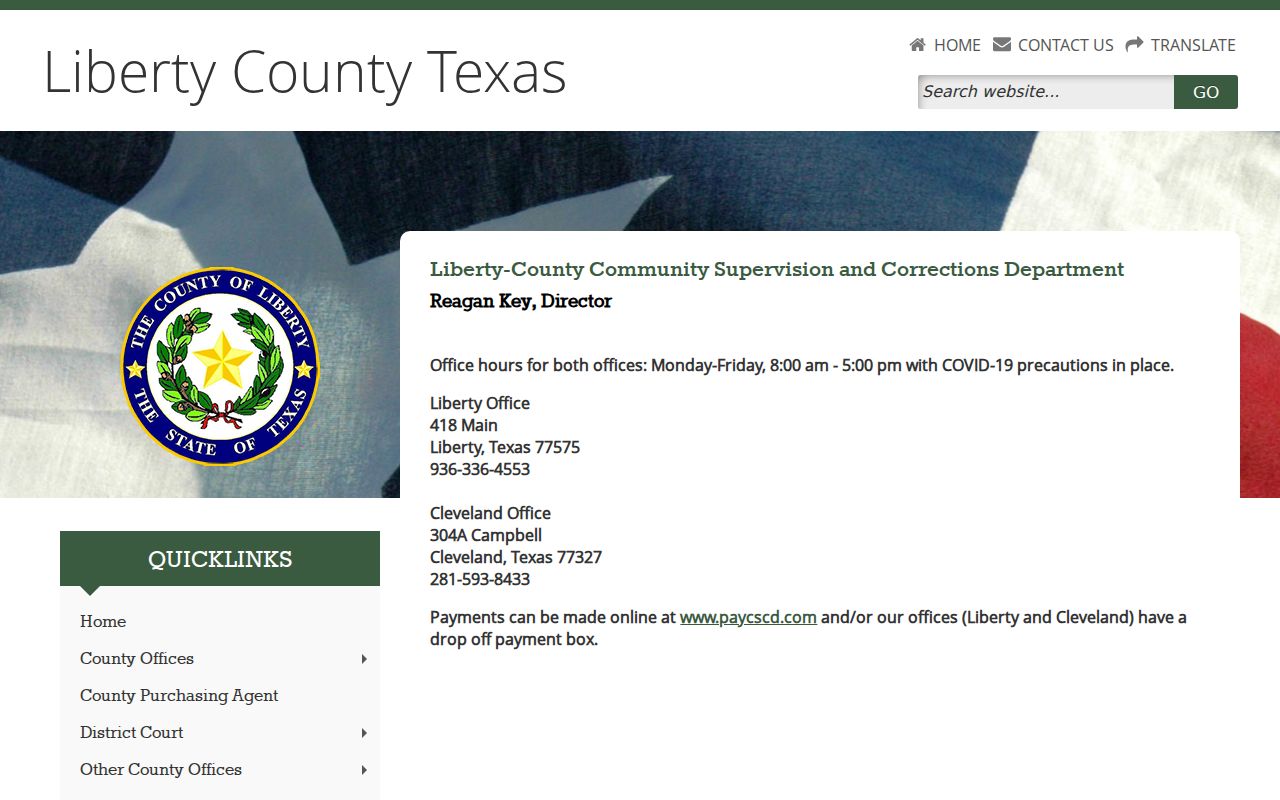
Public court orders are the better source for sentence terms because probation notes and treatment records are not automatically open.
Liberty County Custody and Supervision Records
County jail custody, state imprisonment, probation, and parole are separate statuses. The Liberty County jail answers whether a person is in local custody and records booking and bond. TDCJ Online Inmate Search covers people in the state prison system and may show the TDCJ or SID number, current unit, offense and sentence county, projected release details, and custody status. It does not replace the county jail channel for a new arrest or a person held before trial.
Liberty County CSCD runs community supervision from offices in Liberty and Cleveland. The public usually verifies the sentence through the court judgment because officer notes, tests, treatment, and other supervision casework can be restricted. The Texas Board of Pardons and Paroles makes release decisions, while the TDCJ Parole Division supervises people released on parole or mandatory supervision. Old news or a stale portal result should not be used to infer current status.
The TDCJ Parole Division's official information page documents the state supervision layer.
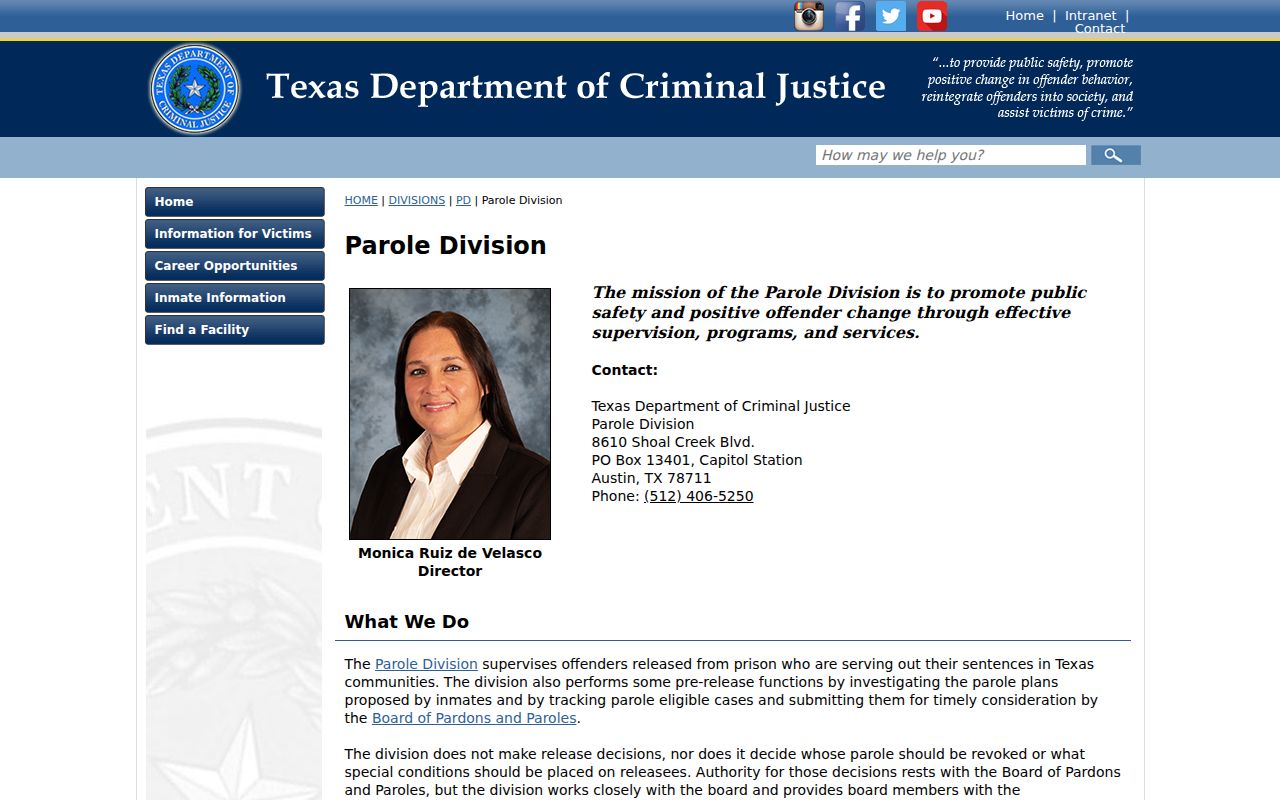
The image represents a state channel that should be read alongside the Liberty County judgment and any current TDCJ custody result.
Liberty County Criminal Records by City
City police departments keep the reports they create, and municipal courts keep fine-only and ordinance cases that may never appear in a county district-case index. The top three incorporated cities by the official Vintage 2025 estimates are Dayton, Cleveland, and Liberty. Each has its own police or municipal access route, while county booking and higher-level prosecution can move the search to sheriff and courthouse records.
Dayton Criminal Records
Population 10,226 · Police reports begin with Dayton, while Municipal Court provides a citation and case search.
Cleveland Criminal Records
Population 9,936 · City police and court channels are joined by a broad county annex at Campbell Street.
Liberty Criminal Records
Population 9,133 · City police, county jail, and courthouse records remain separate despite their close locations.
A city search should move outward only when the event does. A city report does not become a sheriff report, but a person may enter county custody and a Class A or B misdemeanor or felony can become a county court file.
Liberty County Records Across Distance
Liberty County spans about 1,158 square miles and had an official July 2025 population estimate of 121,364. The county seat holds the central courthouse, sheriff headquarters, and county jail, but growth has been especially sharp around Cleveland and Plum Grove. That geography gives the Cleveland annex real records value. It combines a County Clerk counter, sheriff office, adult and juvenile probation, a justice court, a constable, and other county services closer to north-county residents.
Growth does not imply crime. It does mean older portal coverage, staffing descriptions, and custody arrangements should be checked against the current agency. During jail repairs or contracted housing, the arresting agency, booking authority, and physical place of confinement may differ. Searchers should ask which office created the record and where the person is held now rather than infer both from the city of arrest.
The TxDPS Crime in Texas hub is the official source assigned for reported agency statistics.
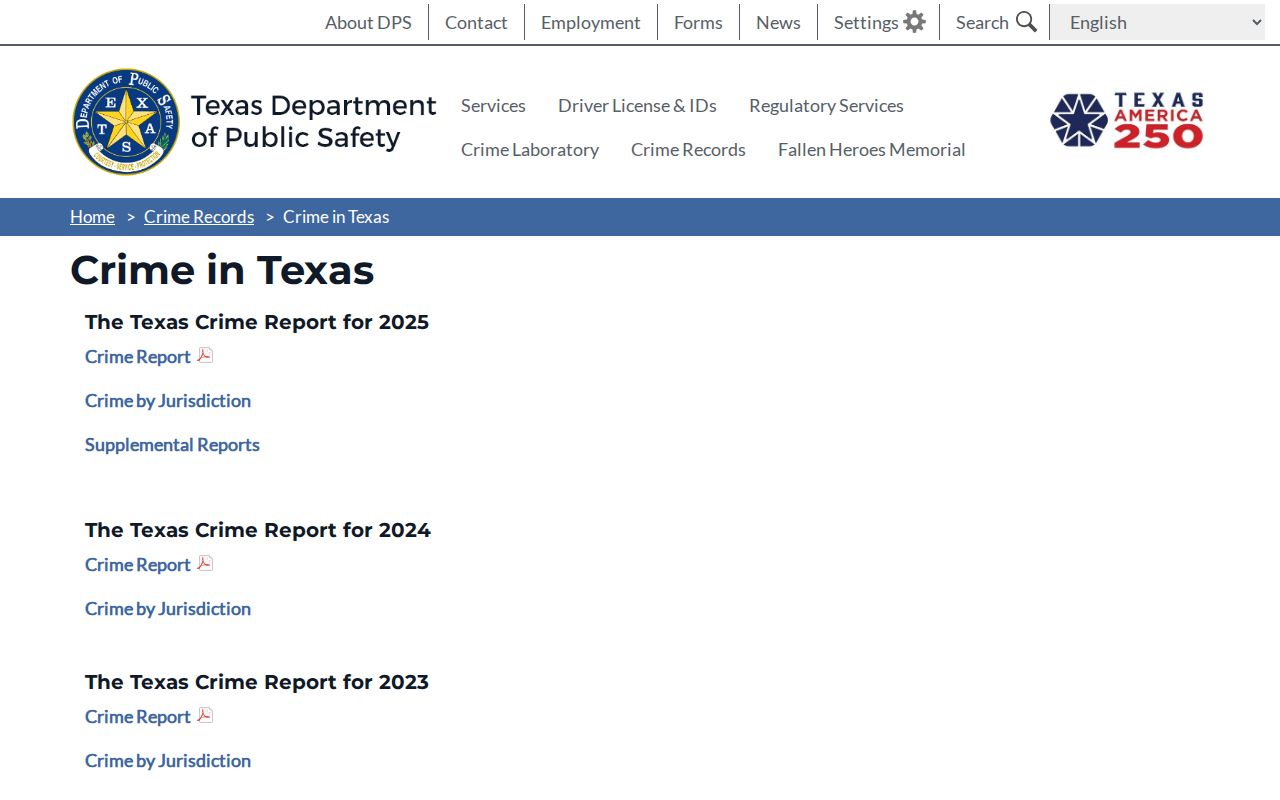
Agency totals should retain their year and reporting label, and sheriff counts should not be casually combined with Cleveland, Dayton, or Liberty police data.